Can AI take a story from script to finished film? Not a clip. A story, with a beginning, an end, and a score.
This is what it took, using a script that had waited twenty years.
I've carried this story for more than twenty years. A real script, scene by scene. I never thought I'd have a way to make it. I knew how to shoot, edit, and animate. What I didn't have was a budget, a crew, and months for something with no client. This wasn't a test of what AI can do. I spent real money and real hours because this was the one story I wanted finished.
Turning a script into something buildable
The first step wasn't an AI tool. I wrote the story down properly. Then I worked with Claude to break it into scenes, with a specific prompt for each shot. Concrete enough to hand to an image generator, not a mood board.
Locking the character and the look
I generated the character design and a full storyboard in Nano Banana, then refined it in Runway. Two problems showed up fast. A wide establishing shot came back with the car facing the wrong way. And across the set, the headphones appeared in some panels and vanished in others. A model generating one frame at a time can't see that. Anyone watching the sequence can. I fixed both by hand in Photoshop. Nothing in the pipeline enforced consistency across twelve panels. That job stayed mine.
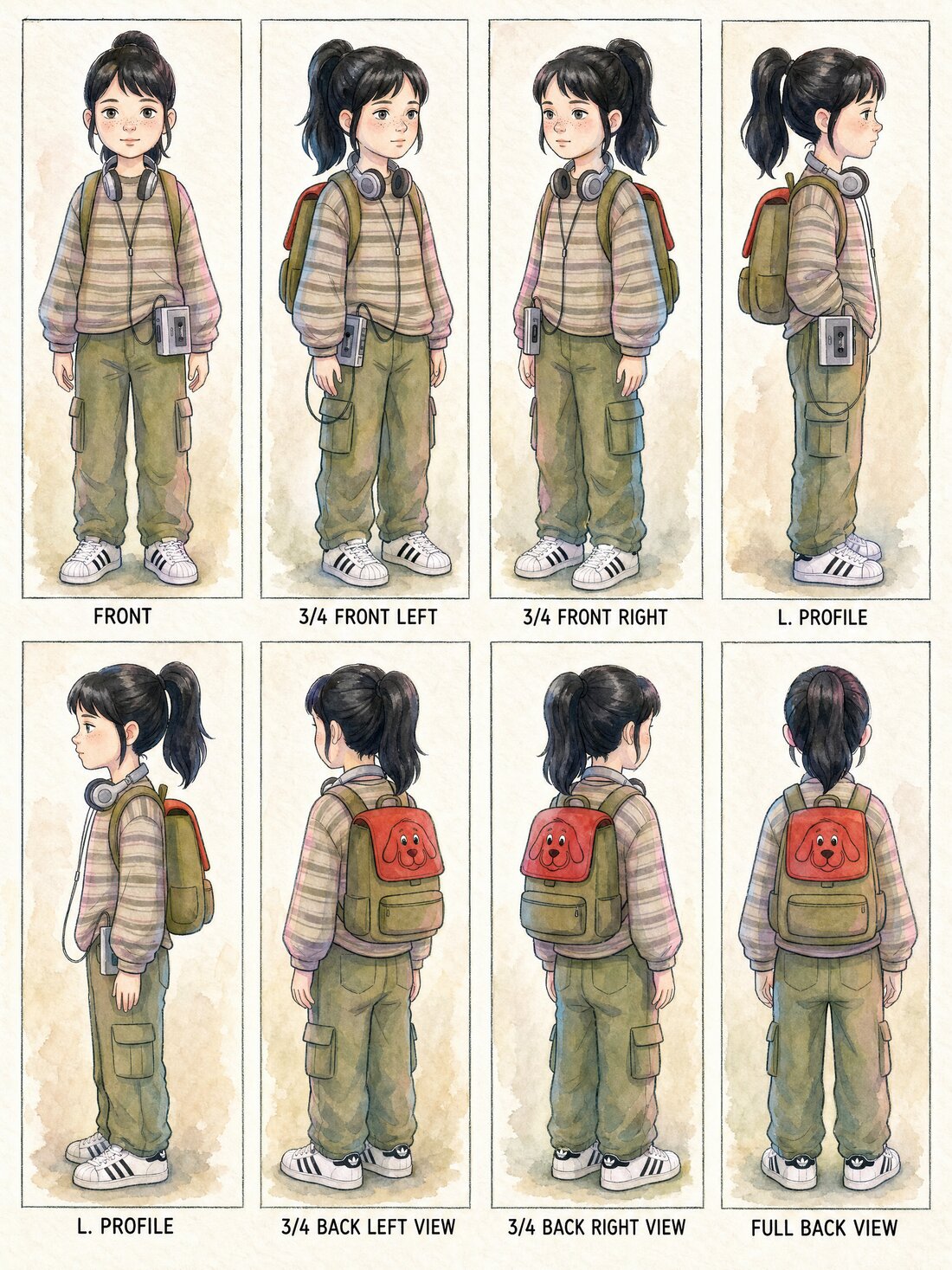
The locked character sheet, eight views, before a single shot was generated.
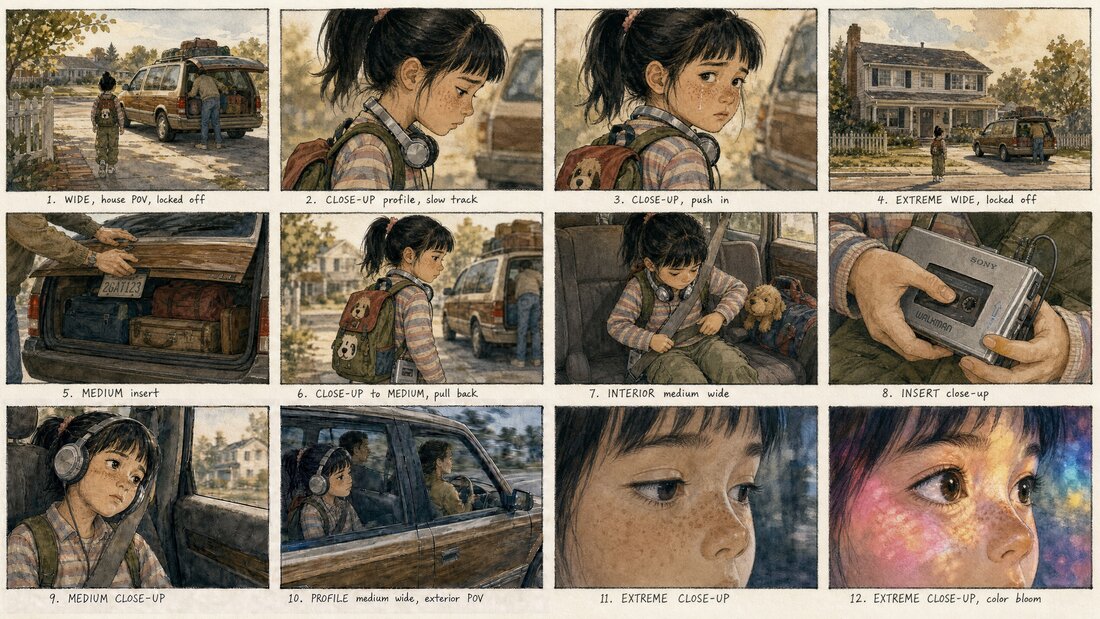
The full 12-panel storyboard, corrected and locked, the reference for every shot after.
The $6 mistake
Storyboard locked, I tried the shortcut. Feed the whole thing into Runway and generate the sequence as one video. It cost about $6 and it was unusable. One long, mostly static take. The story never progressed. A character vanished from frame with no explanation. These tools hold a moment. They don't carry a narrative.
Hover to play. The $6 attempt: one storyboard in, one static take out.
Doing it the slow way
So I generated one shot at a time. Six usable shots cost about $36 in credits. That includes paying roughly $2.50 a try each time I asked the tool to fix an error it caused. With the failed attempt, the project ran about $42 in generation costs, before any of my own hours in Photoshop, Premiere, or After Effects.
The six seconds that needed a human editor
Six clean shots still didn't cut together. In one shot, the father closes the trunk. In the next, he's standing behind the car with the trunk open. Each shot was generated with no memory of the one before. I fixed it in After Effects. Masked out the father and the back of the car, rebuilt the section with the trunk shut, matched the paint, blended the seam, and matched the camera defocus already in the frame. The fix lives in six seconds of the film, 0:25 to 0:31. Nobody watching would know.
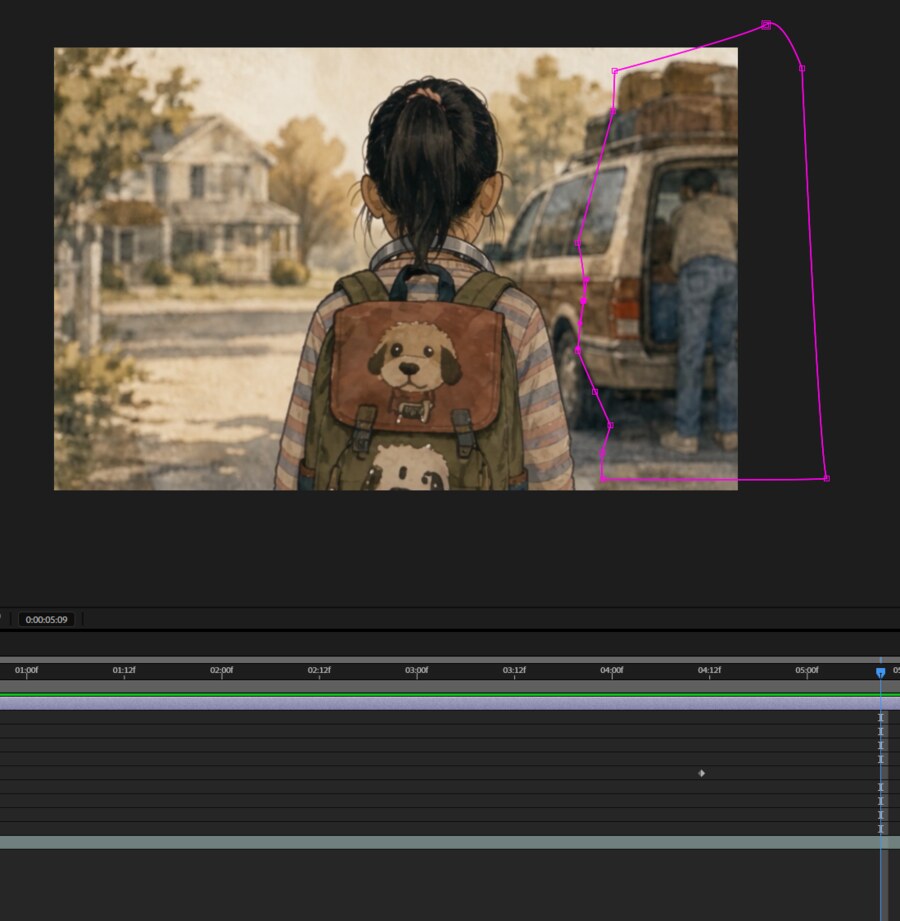
Rotoscoping the father and the back of the car out by hand, to fix a break the AI didn't know it made.
What made the emotion land
The film opens on black with a title card, "MOVING DAY." The six AI shots run from roughly 0:11 to 0:49. A closing card fades in two lines, "THIS IS FOR THE PAST," then "AND FUTURE." No dialogue. The score, also generated in Runway, carries the emotion. Generating it was easy. Mixing it wasn't. I edited and remixed it by hand to land the crescendo where the story needed it. In a film with no dialogue, a half-second late ruins the whole performance.
Hover to play, sound on. The finished film, start to finish.
Why this one
I could have tested the pipeline on anything. I used the one script I'd carried for two decades. The question was never whether AI could make a film. It was whether I could finally make this one. The tools made the attempt possible. They didn't make it automatic. Continuity, compositing, color matching, and cutting to a score closed the gap between six clips and one finished film.
The parents in this story stand in for something else. How this industry has felt the last couple of years, a shift nobody voted for, happening anyway. The sadness on her face leaving that house is close to how it feels watching the ground move under a craft I've spent seventeen years in. The ending is unresolved on purpose. The last shot is her eyes, lit by something vivid and strange outside the frame. I won't say if she's afraid or amazed. She sees something out there. What it means is for the viewer and the future to decide.
AI generated the shots. A person still had to fix the seams between them.
Knowing which parts of a process still need a trained eye is the judgment I bring to every client engagement. See how that shows up in an engagement →